

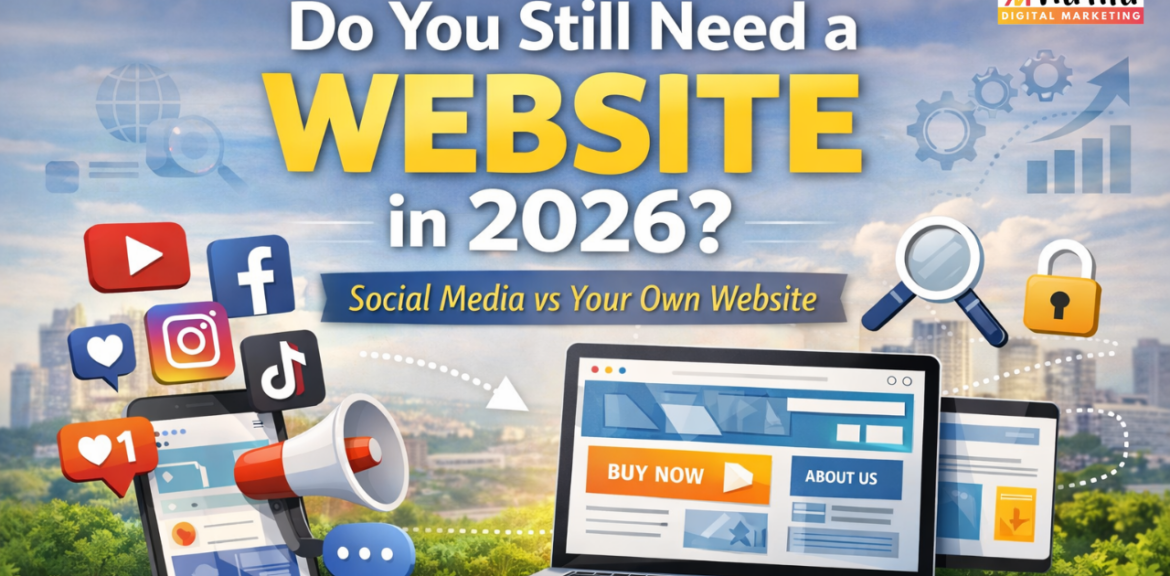

Many people today ask a simple question. If social media, apps, and AI tools are everywhere, do businesses still need websites? The Answer is “Yes”. Over the years, people have repeatedly claimed that “the web is dead.” However, the reality is more complex.
The Internet Has Changed
The way people access information online has evolved. In the past, websites were the main place where people found information, services, and products related to their queries. Today users also rely on mobile apps, social media platforms, and AI tools to discover content.
Because of this shift, some businesses think they can rely only on social media pages or third party platforms. These platforms allow businesses to quickly reach large audiences and share short pieces of content.
However, this does not replace the role of websites.
Websites Still Play an Important Role
A website is something a business fully owns and controls. Social media platforms may change algorithms, policies, or visibility rules at any time. When that happens, businesses can lose reach or access to their audience. A website provides stability. It allows businesses to present their brand, share detailed information, and create a consistent experience for visitors.
Websites also make it easier for people to find businesses through search engines. When someone searches for a service or product, websites provide structured content that search engines can understand and display in results.
It Depends on Your Goals
In my view, the need for a website is not the same for everyone. It largely depends on the goals and objectives of the person or business.
For example, someone sharing quick content or entertainment might rely mostly on social platforms. But businesses that want long term visibility, credibility, and control usually benefit from having their own website.
The Best Approach for Businesses
Instead of choosing between social media and a website, the most effective strategy is to combine both.
Social media can help businesses reach new audiences and promote content quickly. A website can serve as the main hub where customers learn more, explore services, and take action.
In the modern digital landscape, websites are not disappearing. They are evolving alongside other platforms. Businesses that understand how these tools work together will be better prepared for the future of online visibility.
